
.png)


.svg)
Why Concrete and Wood Decks Fail in Different Ways
Knowing how to waterproof a concrete deck starts with understanding that concrete and wood fight the same enemy, water, in completely different ways. Here's where they split:
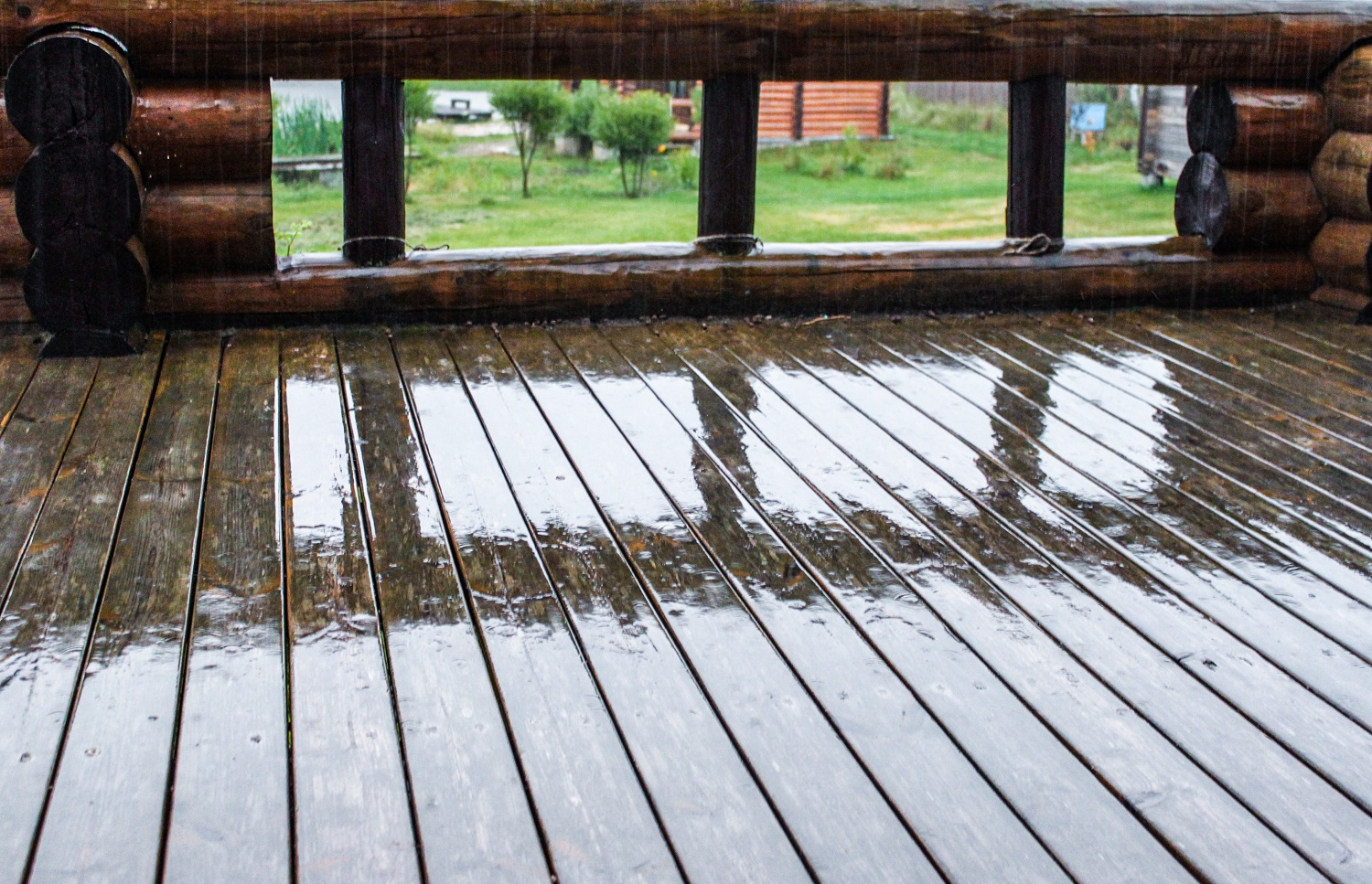
- Wood rots. The fibers stay damp, fungus moves in, and boards go soft from the inside.
- Concrete doesn't rot, but it spalls, cracks, and wicks moisture straight through the slab because it's porous all the way down.
That difference changes the whole job. With wood, you're working with a surface that needs to breathe and move as individual boards expand and contract. Good concrete deck waterproofing does the opposite: it lays a fully bonded barrier across one continuous slab that's quietly absorbing water and shifting with the weather.
So the three things that decide whether the job holds are prep, bonding, and crack bridging. None of them play out the same way on a wood deck, and that's where most of the trouble starts.

How to Waterproof a Concrete Deck Starts With Surface Prep
On a wood deck, prep is mostly a clean and a light sand. On concrete, prep is the job. Skip it and nothing else you do matters.
Fresh and aging concrete both carry stuff that wrecks adhesion. New slabs leave behind laitance, a weak, dusty layer of cement and fine particles that rises to the surface as water bleeds up during curing. Older slabs collect oils, old sealers, and grime that soak in rather than sit on top. A coating laid over any of that grabs the contaminant instead of the concrete substrate, and it lets go later.
Real prep usually means:
- Deep cleaning to pull out embedded dirt, oils, and stains, not just a quick rinse
- Profiling or etching so the deck surface has enough tooth for the coating to key into, avoiding smooth finishes that prevent adhesion
- Repairing cracks and spalls before anything waterproof goes down, using appropriate materials to create a smooth finish
- Confirming the slab is fully dry, which around here is the step people rush
That last one trips up a lot of Eastside projects. A slab can look dry on top after a sunny Saturday in Bellevue and still be holding moisture deeper down, especially heading out of our long wet stretch from October through spring.
Checking Moisture Before You Coat
Concrete holds water far longer than a wood deck does, and our climate doesn't help it dry out. A simple plastic-sheet test tells you whether the slab is ready: tape a square of plastic down overnight, then check for trapped condensation underneath in the morning.
Seal a damp slab and the moisture has nowhere to go but up, right into the underside of your fresh coating. That's how you end up with blisters within weeks.
Bonding and Primer: The Step Wood Decks Usually Skip
Here's a step that barely exists in the wood world. Bare concrete almost always needs a primer matched to the coating system before the waterproofing layer, because raw slab and most coatings don't bond well on their own. The primer soaks into those open pores and gives the membrane something to actually hold onto.
Watch for efflorescence too, that chalky white bloom that shows up on concrete. It's mineral salt left behind as moisture moves up through the slab and evaporates. It looks cosmetic, but it's really a signal that water is traveling through your concrete, and it has to be removed before coating or it'll keep pushing your waterproofing right off the surface.
When bonding fails, you can usually see it:
- Blistering across the surface
- Peeling at the edges
- Delamination in sheets
On a wood deck a failed finish weathers off slowly. On concrete it tends to let go in patches, and every patch is an open door for water damage.

Crack Bridging and Why It Matters More on Concrete
Concrete cracks. That isn't a defect, it's just what concrete does as it cures and as it expands and contracts through Bellevue's temperature swings. Hairline cracks are normal, and they move.
That's why crack bridging matters so much here. A crack-bridging coating is flexible enough to stretch across a small crack and stay sealed even as that crack opens and closes with the seasons. A rigid coating can't. It splits right where the concrete splits, and now you've got a waterproof layer with a leak running straight through it.
This is the single biggest thing to understand about how to waterproof a concrete deck: it isn't a wood-deck job in disguise. A wood deck flexes at the boards. A concrete slab flexes through its joints and cracks, and your coating has to be built to move with it.
Choosing a Concrete Deck Waterproofing Membrane or Coating
Once prep and bonding are sorted, you're choosing what goes on top. There's no single best pick, it depends on the deck.
Liquid-Applied Membranes
A concrete deck waterproofing membrane that's liquid-applied goes down as a seamless coat with no seams to fail. That makes it a strong choice for:
- Decks with odd shapes or lots of corners
- Rooftop decks and sun decks
- Anything sitting over a finished room below
Seamless matters most exactly where seams would otherwise leak.
Elastomeric and Polyurethane Coatings
These are your flexible, crack-bridging options. A good waterproof concrete deck coating in this family stays elastic and moves with the slab instead of fighting it. Polyurethane in particular holds up well to heavy foot traffic and weather, which suits a deck that actually gets used.
When a Full System Beats a Single Coat
Sometimes one coat isn't enough. Concrete deck waterproofing systems typically layer a compatible primer, membrane, reinforcement (often with fiber-lath or fabric), and a durable top coat into one engineered package. If your deck sits over a garage, a balcony, or any finished space below, a full system is worth it, because a leak there doesn't just damage the deck, it damages whatever's underneath.
This is also roughly where DIY ends. A ground-level patio is a reasonable weekend project. A deck over living space, with drainage detailing and flashing at every penetration, really isn't. The cost of getting it wrong above a finished room is a lot steeper than the cost of doing it right.
Common Concrete Deck Waterproofing Mistakes Around Bellevue
A few patterns show up again and again on Eastside decks:
- Coating over a damp slab. Our wet season runs long, and an impatient dry-down is the top cause of early failure.
- Skipping crack repair. Laying membrane over an unrepaired crack just hides the problem until it telegraphs through.
- Treating an elevated deck like a patio. Decks over living space need slope, drainage, and edge detailing a ground slab never does.
- Ignoring slope and penetrations. Water pools where slope is wrong and sneaks in around posts, drains, and edges that weren't detailed properly.
Almost all of these mistakes come down to the same misunderstanding about how to waterproof a concrete deck: rushing a slab that wasn't ready, in a climate that punishes shortcuts harder than most. Caught early, that's a recoat. Caught late, it's a waterproof deck repair.
The Bottom Line for Bellevue Homeowners
Prep, bonding, and crack bridging are the three things that separate a concrete deck from a wood one. They're also the three things that decide whether your waterproofing lasts five years or fails by spring.
Concrete asks for patience with dry-down, the right primer for the system, and a coating that flexes with the slab. Wood asks for something else entirely. The mistake is assuming they're the same job.
And here's the part that brings it home for a company like ours: when concrete deck waterproofing fails, the water doesn't stop at the concrete deck surface. It runs down into the wood framing, joists, and supports underneath, and that's where rot quietly takes hold.
At Rot Doctor, we've pulled apart plenty of Bellevue decks where a tired coating up top turned into soft, failing structure below before anyone spotted it. If your concrete deck is cracking, flaking, or you just aren't confident the last waterproofing job held, get a free estimate and we'll check what's happening underneath before it becomes a structural repair.
FAQs
How often should I re-waterproof a concrete deck in the Bellevue climate?
It depends on the coating and how much sun, heavy foot traffic, and exposure to UV rays the deck takes, but our wet Pacific Northwest winters are hard on any finish. Plan to inspect yearly and expect to recoat every few years for most coatings. A quality liquid membrane or full system stretches that timeline out considerably.
Can I waterproof a concrete deck myself, or should I hire a professional?
A ground-level concrete patio is a fair DIY project if you're patient with prep and dry-down. A deck over a garage, a balcony, or any finished living space is not, because drainage detailing and flashing around penetrations are easy to get wrong and expensive to fix once water intrusion gets in.
What's the difference between a concrete deck coating and a membrane?
A coating is generally a thinner protective layer that seals the deck surface. A membrane is a thicker, often reinforced barrier built to handle movement and standing water. Decks over living space usually call for a membrane or a full system rather than a single coat.
Why is my concrete deck coating peeling or bubbling?
Almost always a prep problem. The slab was damp when it was coated, the surface wasn't cleaned or profiled enough for the coating to bond, or efflorescence was left in place. The fix is to strip the failed areas, prep correctly, and recoat.
Do I need to fix cracks before waterproofing a concrete deck?
Yes. Coating over an unrepaired crack just buries it. As the concrete moves with temperature, the crack works back through your waterproofing and reopens the leak. Repair and bridge cracks first, then coat.
How long does new concrete need to cure before waterproofing?
Concrete usually takes about 28 days to reach full structural cure, but that's not the same as being dry enough to coat. In Bellevue's damp climate, the calendar cure and the actual moisture readiness can diverge significantly, so a slab can hit 28 days and still hold too much moisture to seal. Always run a moisture test before coating, no matter how many days have passed.
Does waterproofing a concrete deck protect the wood structure underneath?
It does, and that's the real point of it for a lot of homes. A deck over wood framing relies on the waterproofing up top to keep moisture off the joists and supports below. When the coating fails, that hidden wood is the first thing to rot.
Is concrete deck waterproofing different for a rooftop or over-garage deck?
Yes, and it's a bigger job. Rooftop decks and sun decks over living space need proper slope, drainage, and detailing at every edge and penetration, plus a system robust enough that a failure doesn't soak the room below. These are best left to a professional.

.svg%20fill.svg)




.svg)