
.png)


.svg)
Signs of Structural Rot in Bellevue Homes
Structural rot affects parts of the home that support weight, such as beams, joists, framing, and sill plates. Because these areas are often hidden from view, damage can go unnoticed until visible symptoms appear.
In Bellevue, the region’s frequent rainfall, high humidity, and occasional snow can keep wood damp for extended periods, creating the perfect environment for rot to develop. Homes with basements, crawlspaces, or older decks are especially susceptible to moisture-related structural damage.
Here are common warning signs that may indicate structural rot and help you identify wood rot early. Recognizing these issues promptly allows Bellevue homeowners to act before structural wood rot repair becomes costly or urgent.
Soft or Crumbling Wood
One of the earliest signs of rot is wood that feels soft or spongy when pressed. Healthy structural lumber should feel dense and solid. If a screwdriver, paint scraper, wood chisel, or wire brush easily penetrates the surface, the wood fibers may already be decaying.
Homeowners in Bellevue sometimes discover this issue when inspecting exposed framing in basements, crawlspaces, or decks. Soft spots and spongy spots often signal the beginning stages of rot before more obvious structural damage appears.
Sagging or Uneven Floors
A rotted floor joist can cause noticeable changes in the floor above it. You may notice areas that feel spongy underfoot, dips in the flooring, or uneven sections where furniture doesn’t sit level.
Floor joists support the weight of rooms and distribute loads across the structure. When rot weakens them, floors can shift or sag slightly over time. In these cases, inspection and repair by a professional rot experts are recommended to determine whether reinforcement or replacement is needed.
Cracks Around Door or Window Frames
Structural wood movement caused by rot can affect surrounding elements like doors and windows. Frames may shift slightly, causing gaps or making doors harder to close properly.
Although this issue can have several causes, persistent alignment problems paired with moisture damage and peeling paint may point to underlying rot in the surrounding framing or door frames and window sills, which is common in older Bellevue homes exposed to wet winters.
Visible Damage to Beams and Fascia Boards
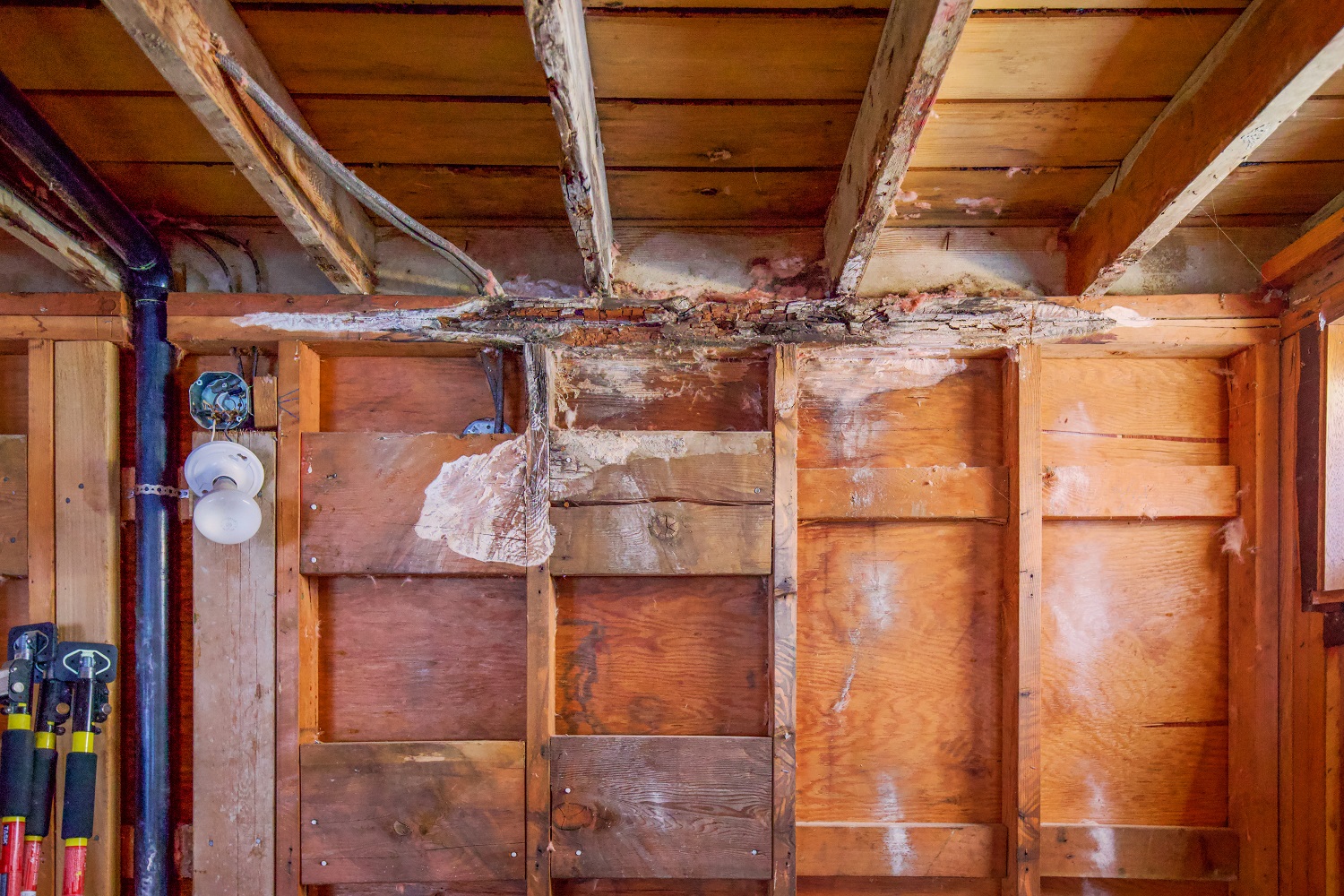
Support beams and fascia boards in basements, crawlspaces, or garages are often exposed. A rotted support beam may show cracking, discoloration, or sections where wood appears hollow or deteriorated.
Rot in load-bearing beams should be addressed quickly. These beams distribute structural loads, and damage can gradually reduce their strength, affecting the overall structural stability of your home.
Musty Odors and Moisture in Damp Areas
Wood rot fungi thrive in damp areas with poor ventilation. If you notice persistent musty odors, particularly near structural wood, it may indicate ongoing moisture issues that encourage decay.
Leaks, condensation, poor drainage, or poor ventilation often create the conditions where rot spreads. For Bellevue homeowners, rainy seasons and high humidity make addressing moisture sources and applying fungicide an important step in preventing further damage and future wood rot.
What Causes Structural Rot
Structural rot develops when excess moisture remains trapped in wood long enough for decay fungi to grow. Over time, the fungi break down the cellulose in wood, weakening its structure and compromising the integrity of your wooden structures.
Several environmental factors commonly lead to rot in homes.
Water Intrusion and Constant Exposure
Leaking roofs, plumbing failures, poor drainage, and poorly sealed windows can allow water to reach structural framing. When wood stays damp for extended periods, decay organisms begin to grow.
Even small leaks, common during Bellevue’s rainy months, can eventually lead to structural damage if left untreated, creating wet wood conditions that promote fungal growth and wood rot fungus development.
Poor Ventilation and Damp Areas
Crawlspaces, attics, and basements often trap moisture when ventilation is inadequate. Humid air creates conditions where wood remains damp for long periods.
Proper ventilation helps reduce moisture buildup, preventing the wood surfaces from becoming hospitable to fungal growth and the development of wet rot or dry rot in home structures, a problem often noticed in older Bellevue homes with limited airflow.
Ground Contact and Wood Damage
Wood framing or posts that touch soil directly are more likely to absorb moisture. Over time, this exposure can cause rot, particularly in deck posts, beams, and sill plates.
Protective coatings and rot resistant wood can help reduce moisture exposure and prevent wood rot in these vulnerable areas, which is especially important for homes built close to Bellevue’s damp, landscaped yards.
Long-Term Neglected Damage
Small problems, such as minor leaks or condensation, can gradually develop into larger structural concerns. Rot rarely appears overnight; it usually forms after months or years of repeated moisture exposure.
In these situations, many homeowners in Bellevue often begin researching how to repair rotting wood once they notice visible deterioration or soft wood.
Common Ways Structural Rot Is Repaired
Repairing structural rot depends on the extent of the damage and the location of the affected wood. Minor deterioration may allow localized repairs, while severe rot may require reinforcement or partial replacement of the compromised wood.
Here are common repair approaches used by contractors.
Epoxy Resin and Liquid Wood Hardener Treatments
When damage is limited to the surface layers of wood, specialized epoxy resin systems and liquid wood hardener can strengthen weakened fibers. These products penetrate the wood and harden, restoring structural integrity.
This method is often part of solutions homeowners explore when learning how to treat rotten wood without replacing large sections of framing. Penetrating epoxy resin seals the wood from moisture and reinforces the remaining wood fibers for long-term protection.
Reinforcing Structural Components with New Boards
In some cases, damaged wood can be strengthened by installing additional framing alongside the affected area. Contractors may add new boards next to weakened joists or beams to restore load-bearing capacity.
This technique allows professionals to fix rotten wood while preserving most of the existing wood and maintaining structural stability.
Sistering Floor Joists with New Boards
If rot affects a floor joist, contractors may attach a new joist alongside the damaged one. This process, called sistering, distributes structural loads across both pieces.
Homeowners researching how to repair rotted floor joist damage often encounter this repair technique as a practical solution to reinforce compromised wood, particularly in Bellevue homes with wooden subfloors exposed to wet conditions.
Beam Reinforcement or Replacement
Rot in beams sometimes requires partial reinforcement or replacing sections of the beam entirely. Repairs depend on how much of the beam has deteriorated and whether structural loads are compromised.
When researching how to fix a rotted support beam, homeowners often discover that professional structural rot repair are needed to ensure safety and proper load support by removing all the decayed wood and replacing it with new wood.
Use of Right Tools and Safety Gear
Successful structural rotted wood repair requires the right tools such as a screwdriver, wood chisel, putty knife, wire brush, and sandpaper. Using safety gear like gloves, masks, and goggles is essential when working with wood and chemical repair products.
Wood Rot Replacement vs Repair
Not every case of rot requires full replacement. Contractors typically evaluate the severity of the decay before deciding whether repair or replacement is the better option.
When Repairs Are Possible
Repair may be appropriate when:
- Rot is limited to a small rotted area
- Structural strength remains largely intact
- Moisture problems have been resolved
Localized repairs can strengthen the affected wood without major reconstruction. Professionals often use wood hardener and epoxy-based wood filler putty applied to the remaining healthy wood after removing rotted sections. This method allows homeowners to treat rotten wood efficiently, especially in areas prone to dampness in basements, crawlspaces, or older decks.
When Replacement Is Necessary
More severe cases may require replace rotted wood. This happens when decay has spread deep into the wood fibers or when the structural integrity of the component is compromised.
If you're seeing any of these signs in Bellevue, our structural wood rot repair service covers full assessment, safe removal of compromised framing, and rebuild using treated, moisture-resistant materials.
Examples include severely damaged joists, beams, or sill plates that can no longer support weight safely and must be replaced with solid timber or treated lumber to prevent future damage.
Sometimes, homeowners researching wood rot replacement discover that replacing a damaged piece can prevent larger repairs later. Addressing the issue early also limits how far rot spreads into surrounding framing.
Dry Rot Fungus Considerations
Some structural issues involve fungi commonly associated with dry rot fungus. While technically a type of wood decay, it spreads differently and can travel across nearby materials.
In areas like crawlspaces, dry rot floor joist repair may involve removing affected sections, treating adjacent wood with borate-based fungicides, and addressing the underlying moisture problem to prevent recurrence. For homes exposed to damp conditions, such as those in rainy parts of Bellevue, these steps are crucial to maintain long-term structural integrity.
What Affects Costs for Structural Rot Repair
The cost of structural rot repair depends on the location of the damage, accessibility, and how much wood is affected. In Bellevue homes, older framing, exposed basement beams, and elevated decks can make some repairs more labor-intensive. Because load-bearing components support the weight of the house, repairs often require skilled labor and the right materials.
A typical repair cost for structural rot wood damage may depend on factors such as:
- The type of structural element involved (beam, joist, sill plate)
- The extent of rot damage
- Whether reinforcement or replacement is required
- Labor and accessibility in crawlspaces or basements
Minor repairs may involve treating and reinforcing small sections of wood with wood hardener and epoxy filler. Larger projects that involve beam replacement or multiple joists will increase labor and material costs.
Homeowners often compare estimates with broader averages for wood rot repair cost to understand whether their project falls within typical ranges.
In many cases, addressing rot early helps keep repairs manageable. Once decay spreads across several structural components, structural rot repair costs can increase significantly.
Protect Your Bellevue Home from Structural Rot
Structural wood rot can weaken key areas of your home, from beams and joists to framing hidden behind walls or floors. Early signs, soft or spongy wood, sagging floors, peeling paint, or visible deterioration, often show that moisture has been affecting your home for some time.
Knowing the warning signs and causes helps Bellevue homeowners address issues before damage spreads. Prompt structural rot repair can restore strength and prevent more extensive work down the line.
Regular inspections, moisture control, and timely repairs with protective coatings are essential to keeping your home’s structure wood strong. If you notice any signs of rot, contact Rot Doctor today to schedule a professional inspection and protect your home from further damage.
FAQs
How do you repair structural rot in a Bellevue home?
Repairs depend on damage severity. Minor rot in Bellevue homes, where damp winters and high humidity accelerate decay, can be treated with wood hardeners, epoxy consolidants, or reinforced framing. Severe rot may require partial or full replacement of structural components.
Can rotten structural wood be repaired without replacement?
Yes. Limited rot can often be fixed with epoxy treatments or reinforcement, avoiding full replacement, common for floor joists or deck framing.
What parts of a house are most affected by structural rot?
Floor joists, support beams, sill plates, and framing near moisture-prone areas like basements, crawlspaces, or around poorly sealed windows and doors. In Bellevue, frequent rain and high humidity make these areas especially vulnerable.
What causes wood rot in structural framing?
Rot develops when wood stays damp for long periods. Common causes include leaks, condensation, poor ventilation, and ground contact. Older homes or those in Bellevue’s wet climate are more at risk.
How much does structural wood rot repair cost?
Costs vary with the damaged area, type of structural component, and repair complexity. Small fixes may involve localized treatments, while larger replacements require more labor and materials.

.svg%20fill.svg)


.svg)