
.png)


.svg)
Why Dry Rot Is So Common in Bellevue Homes
Bellevue sits in one of the wettest building environments in the country, and dry rot loves it here. The fungus that causes it needs three things: moisture, poor airflow, and untreated wood. Our long grey winters hand it the first two on a plate, and most homes supply the third without anyone realizing it.
What makes dry rot especially tricky in this area is timing. The fungus does its quiet work through the wet months when nobody's inspecting decks or crawling under the house, then goes dormant enough in summer to fool you into thinking the problem stopped. It didn't. It just paused.
The usual culprits around town:
- Wet season rain that soaks siding and decks for months at a time
- North-facing walls and decks that stay shaded and never fully dry out
- Crawlspaces under older Bellevue homes that trap damp air with no cross-ventilation
- Framing behind finished surfaces that gets zero airflow and stays warm enough for fungus to thrive
- Gutters and downspouts that overflow and dump water against siding all winter
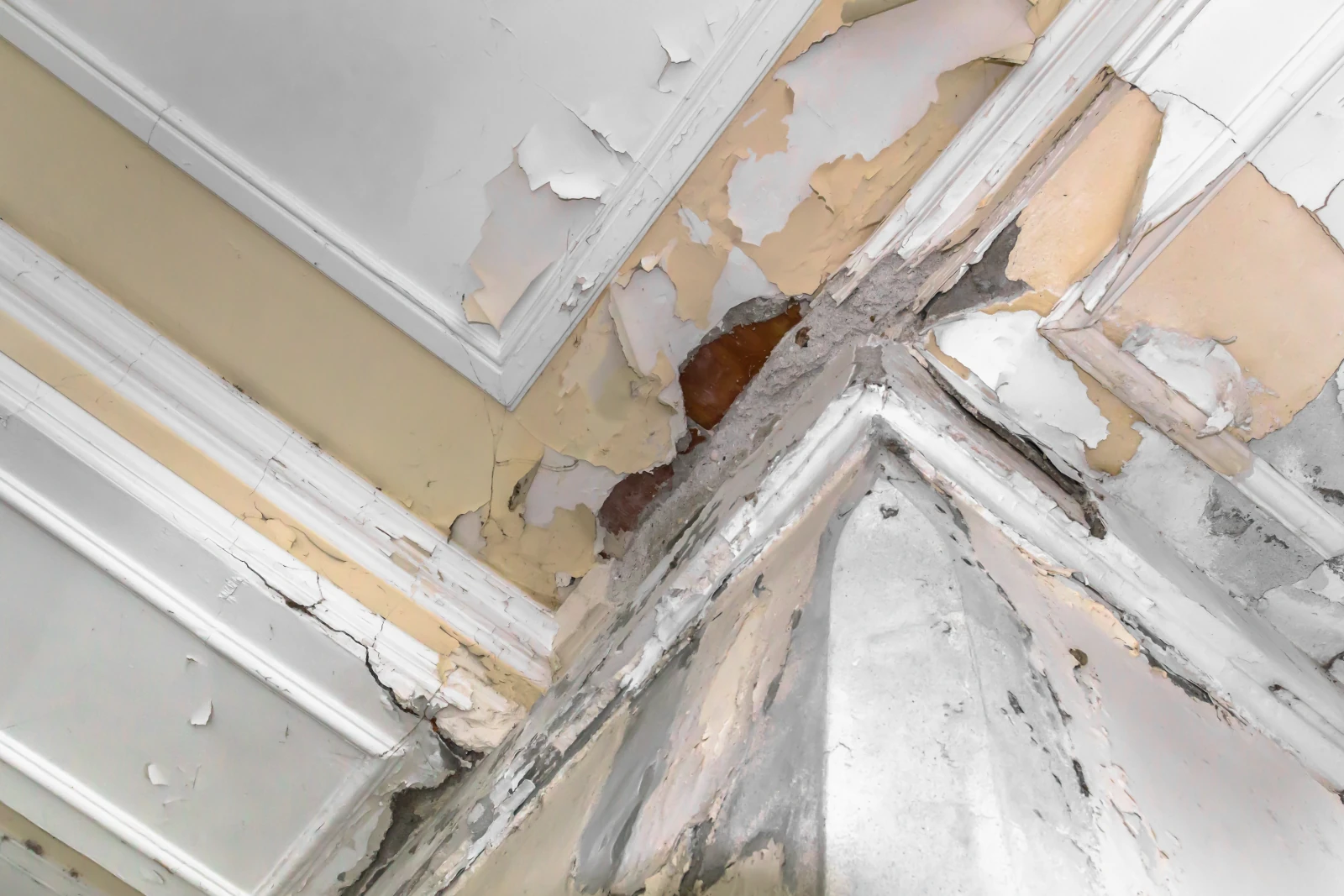
When you check your own place, follow the water: start low and outside where it collects, then work inward. The spots below are where it shows up most.
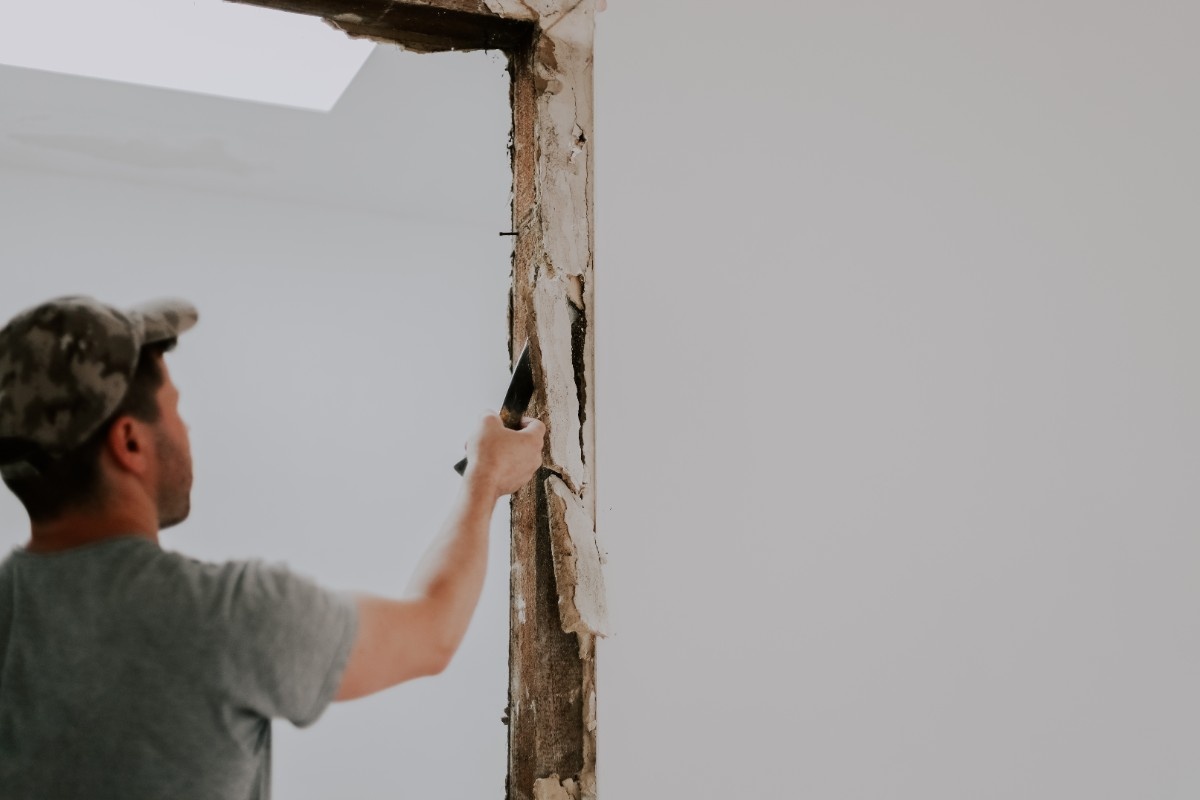
How to Spot Dry Rot Before You Even Touch It
A lot of dry rot gives itself away before you ever reach for a tool. Learning how to spot dry rot early is mostly about knowing what to look and sniff for, and doing it in daylight when discoloration and texture changes are easier to catch.
Most of these are things you can catch on your own from the outside. If you want to go further into the structural signs that show up once rot has moved past the surface, our signs of dry rot guide covers those in more detail.
Watch for these:
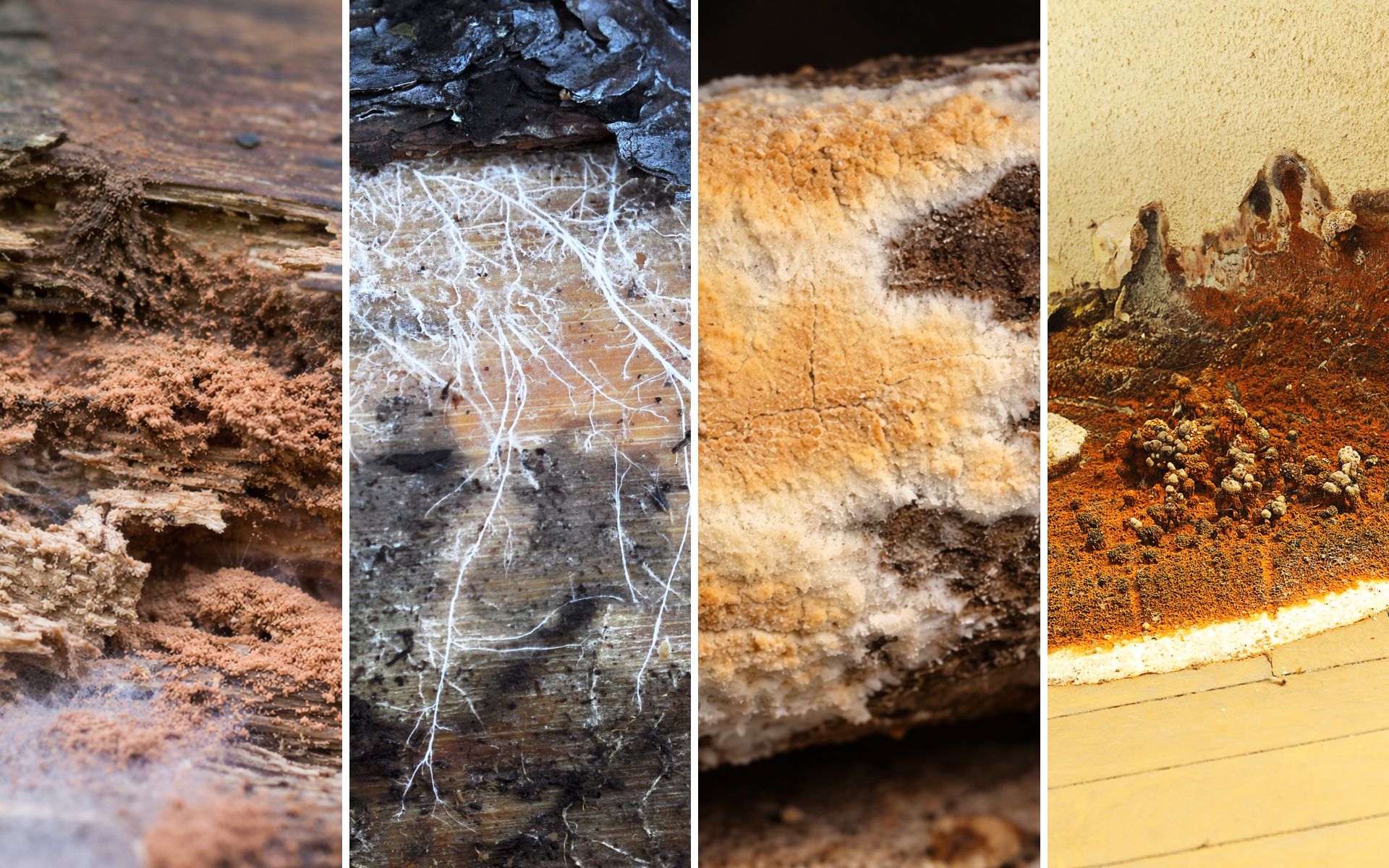
- Wood that has darkened or turned a dull brown compared to the boards around it
- Surface cracking in a blocky, cube-like pattern that runs both along and across the grain
- A damp, musty, mushroom-like smell, strongest in enclosed spaces
- Paint that bubbles or flakes over wood that looks otherwise solid
- Fine grey or white cotton-like strands spreading across the surface or into nearby masonry
The Signs That Fool People
These don't look like rot at first, which is why they get missed for years:
- A window or door that suddenly sticks in winter, because the frame is swelling and softening
- A patch of floor that feels slightly springy underfoot near an exterior door
- Trim that reads as "just old, tired paint" when the wood beneath has already gone
- A section of deck board that flexes a little more than the ones next to it
The Screwdriver Test: How to Test Wood for Rot
The screwdriver test is the classic DIY move, and it's genuinely useful as a first pass. It costs nothing, takes seconds, and gives you a quick read on whether wood has gone soft. Here's how to test wood for rot the right way, and just as importantly, what the result actually means.
How to Do the Screwdriver Test
- Pick a spot that looks discolored, cracked, or feels damp to the touch.
- Press the tip of a flathead screwdriver firmly into the wood at about a 45-degree angle.
- Read the resistance. Healthy wood pushes back and the tip barely dents it.
- If the tip sinks in easily or the wood crumbles and flakes away, you've likely found rot.
- Try to pry up a small sliver. Sound wood lifts in a long splinter, while rotted wood breaks off short and clean.
- Repeat at several points around the suspect area, not just the one obvious spot.
What the Screwdriver Test Confirms vs What It Can't
What it confirms:
- Soft, punky wood right at the surface
- Obvious active rot you can physically break apart
- A rough sense of how spongy one specific spot has become
What it misses:
- Rot hiding behind paint, caulk, or siding where the probe never reaches
- Internal decay inside a beam that still feels firm on the outside
- Rot that has traveled along the grain well past the spot you tested
- The moisture source that's still feeding the problem
- Early-stage rot that hasn't softened the surface yet but is already established underneath
That last group is the problem. A beam can pass the poke test on its face and still be hollowing out from the inside, which is exactly how Bellevue homeowners get blindsided by a deck or joist that fails long after a "clean" screwdriver check. The tool only knows what the outer eighth of an inch is doing. It has nothing to say about the other four inches behind it.
How to Tell if Wood Is Rotted Without Guessing
One poke isn't a verdict. Knowing how to tell if wood is rotted for real means treating it like a small investigation rather than a single test. The goal isn't just to answer "is this spot bad" but "how far does this go, and why is it happening."
A Simple Step-by-Step Check
- Test multiple points across and around the damage, not one convenient spot, so you can map roughly how large the soft area is
- Trace the moisture source. Rot always follows water, so find the leak, splash zone, or trapped damp that's keeping the wood wet
- Inspect the framing connected to the bad wood, since rot spreads through contact from one board into the next
- Compare the texture. Dry rot leaves dry, crumbly, cubed wood, while wet rot stays soggy and stringy, and the two call for different fixes
Working through those four steps is really how to identify dry rot with confidence, and it's the same routine we use when homeowners ask us how to inspect for dry rot before committing to repairs. If you're still unsure how to check if wood is rotten after all that, the damage is probably deeper than a surface test can settle.
One more tip: check the same spots twice a year, once at the end of the wet season and once in late summer. A soft area that has grown between visits tells you the rot is active and the moisture problem is still unsolved.
Trouble Spots to Inspect in Bellevue Homes
- Window frames on the weather side, where dry rot in window frames starts at the sill and creeps inward before the paint ever cracks
- Floorboards near entries and sliders, where dry rot in floorboards spreads under the finish from tracked-in rain and door leaks
- Deck ledgers and stair stringers that stay shaded and hold water long after the rain stops
- Sills and trim on the side of the house that takes the worst of the wind-driven rain off Lake Washington
- The base of exterior door frames, a classic Bellevue rot spot where splash back and poor flashing meet
Does Dry Rot Spread? Why One Soft Spot Rarely Stays One Spot
Dry rot doesn't sit still. Once the fungus takes hold, it feeds outward through the wood looking for its next damp meal, so a single soft board is rarely the whole story.
Before you write off a small patch as "just a small patch":
- It moves along the grain first, so rot in one deck board is often already into the joist below
- It can send strands across brick and mortar to reach dry timber on the other side
- It speeds up in the exact conditions Bellevue serves all winter: steady damp, mild temps, no airflow
This is why a clean screwdriver reading from last spring means little now. If the moisture source is still active, the rot you can't see has had months to travel. Treat any soft spot as the edge of something bigger until you've proven otherwise. If you want to see how an infestation moves from a first soft spot to structural damage, our stages of dry rot damage guide walks through it.
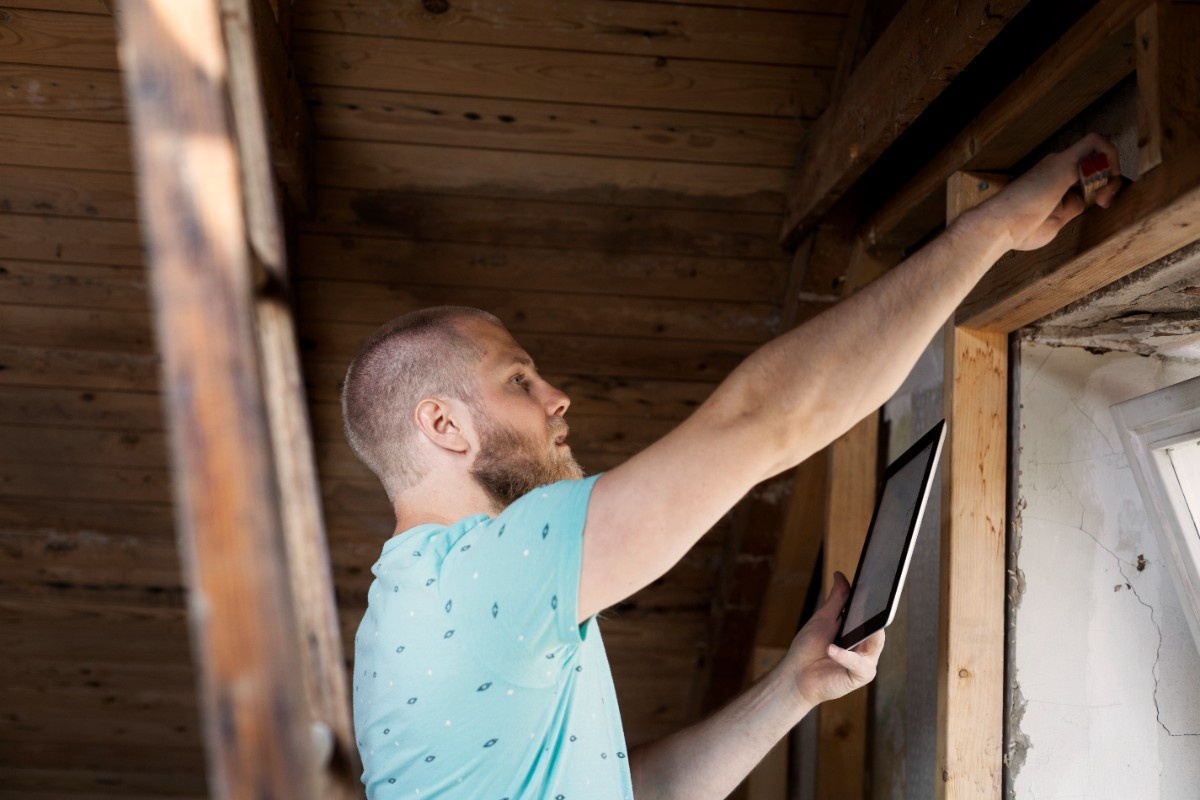
When to Stop Testing and Book a Dry Rot Inspection
DIY checks are great for catching a problem. They're not built to measure how far it's gone. That's where a professional dry rot inspection comes in, because confirming the hidden extent usually means pulling trim, probing behind siding, and running a moisture meter to trace the wet path back to its source.
The difference is what happens after the damage is found. A homeowner sees a soft board and patches it. An inspector asks where the water came from, how far the fungus traveled, and whether the boards around it are already compromised, then fixes the cause so it doesn't come straight back.
Signs You've Hit the Limit of a DIY Check
- The rot involves structural framing like joists, beams, or posts
- The damaged area keeps growing past where you first found it
- Rot keeps coming back in the same spot after past patch jobs
- You can't figure out where the moisture is coming from
- The wood looks fine on the surface but the smell or soft paint says otherwise
- You've found the white strand-like growth that means the fungus is actively spreading
So, Can You Trust the Screwdriver Test?
The screwdriver test is a fine way to start, and every Bellevue homeowner should feel free to grab one and go poking. Just remember that knowing how to tell if wood is rotted means reading the signs a screwdriver can't reach: the rot behind the paint, the decay inside a beam, the leak still quietly feeding it all. In a climate this wet, what you can't see is usually what does the real damage.
If your own check turned up soft wood, a musty crawlspace, or a spreading soft spot you can't explain, that's the point to bring in someone who does this every day. Rot Doctor is a local, family-owned Bellevue rot repair team. Reach out for a free estimate if you just want a second opinion on what you found, or book our $49 dry rot inspection when you want the full picture: moisture readings, annotated photos, and a repair plan you can act on.
FAQs
Can you check your own home for dry rot?
Yes. A visual scan plus a screwdriver test will catch most surface rot. A DIY check can confirm rot is present, but it can't reliably measure how deep it goes or how far it has spread behind the surface.
How serious is dry rot?
Serious enough to compromise structure if it's ignored. Dry rot doesn't stop on its own, and left alone it can weaken joists, decks, and framing to the point of failure. Given how long Bellevue wood stays damp through the year, a small problem here has more time to become a big one.
What causes dry rot?
A wood-eating fungus that thrives in damp, poorly ventilated spaces. Persistent moisture from plumbing leaks, blocked gutters, roof damage, or trapped humidity keeps timber wet long enough for the fungus to activate and take hold.
Does dry rot spread?
It does, and that's what separates it from a simple wet patch. The fungus travels through connected wood along the grain and can push strands across masonry to reach fresh timber, so one soft board is rarely contained to that board.
How fast does dry rot spread?
Faster than most people expect. An active infection can advance several feet in a season, and the shaded, north-facing framing common on Bellevue homes gives it the steady damp it needs to keep moving instead of stalling out in a dry spell.
Can you fix dry rot yourself?
Small cosmetic spots, sometimes. Structural rot, no. Once framing is involved, the fix means cutting back to sound wood and correcting the moisture source, which takes tools and experience most homeowners don't have on hand.
How much does a dry rot inspection cost in Bellevue?
It depends on the size of the affected area and how easy it is to reach. Reach out to Rot Doctor for local pricing, and we'll assess your specific situation in person.

.svg%20fill.svg)




.svg)